Snacks for Toddlers: 30 Healthy, Easy Ideas
Snacks for toddlers can be really simple, like plain yoghurt with mashed banana, soft cooked vegetables with bean dip, or lightly toasted bread with a…
Snacks for toddlers can be really simple, like plain yoghurt with mashed banana, soft cooked vegetables with bean dip, or lightly toasted bread with a thin spread. Choose textures your child can handle, cook with care, and always stay with them while they eat.
Sometimes your toddler wants the same spoon as yesterday, even if the yoghurt is ready. Snack choices often depend on what feels familiar, not just the food. Keep a few flexible ingredients on hand so you can offer something that works without making a new recipe every day.
These ideas are for toddlers aged about 1 to 3 years who are already eating solid foods. They are not meant as infant feeding instructions. If your child has swallowing difficulties, allergies, or other special needs, always follow their individual feeding plan.
What makes a useful toddler snack?
The AAP recommends offering a mix of foods, like a fruit or vegetable, a grain or starchy vegetable, and a protein food (including dairy). They also say that not every snack needs to be a mini meal—variety throughout the day is what matters.
Start with a small portion and offer more if your child wants it. Let your child stop eating when they are done. For family meals, our healthy food for kids guide covers the main food groups for everyday eating and is aimed at children aged 2 and up.
How should you prepare food to reduce the risk of choking?
The CDC says to make sure your child is developmentally ready, choose the right shape and texture, have them sit upright, and supervise them at all times while eating. Avoid giving snacks when your child is walking, in the car, or sitting in a stroller.
These tips follow that advice and the NHS food preparation guidance. No cutting method can make food completely safe from choking.
| Food | Preparation to consider | Avoid |
| Grapes and cherry tomatoes | Quarter into narrow pieces; remove hard pips or stones | Whole round fruit |
| Firm apples and carrots | Cook until soft, or grate as appropriate to skills | Hard raw chunks |
| Beans, chickpeas and peas | Cook thoroughly and mash or flatten | Whole firm beans or round peas |
| Cheese | Grate or cut into short, narrow strips | Large cubes or string-cheese chunks |
| Nut and seed butter | Spread thinly or mix thoroughly into porridge | Spoonfuls, lumps or thick layers |
| Bread | Cut into narrow strips; lightly toast white bread | Large doughy pieces |
| Meat and fish | Remove bones; finely shred tender meat or flake fish | Tough chunks, bones or skin |
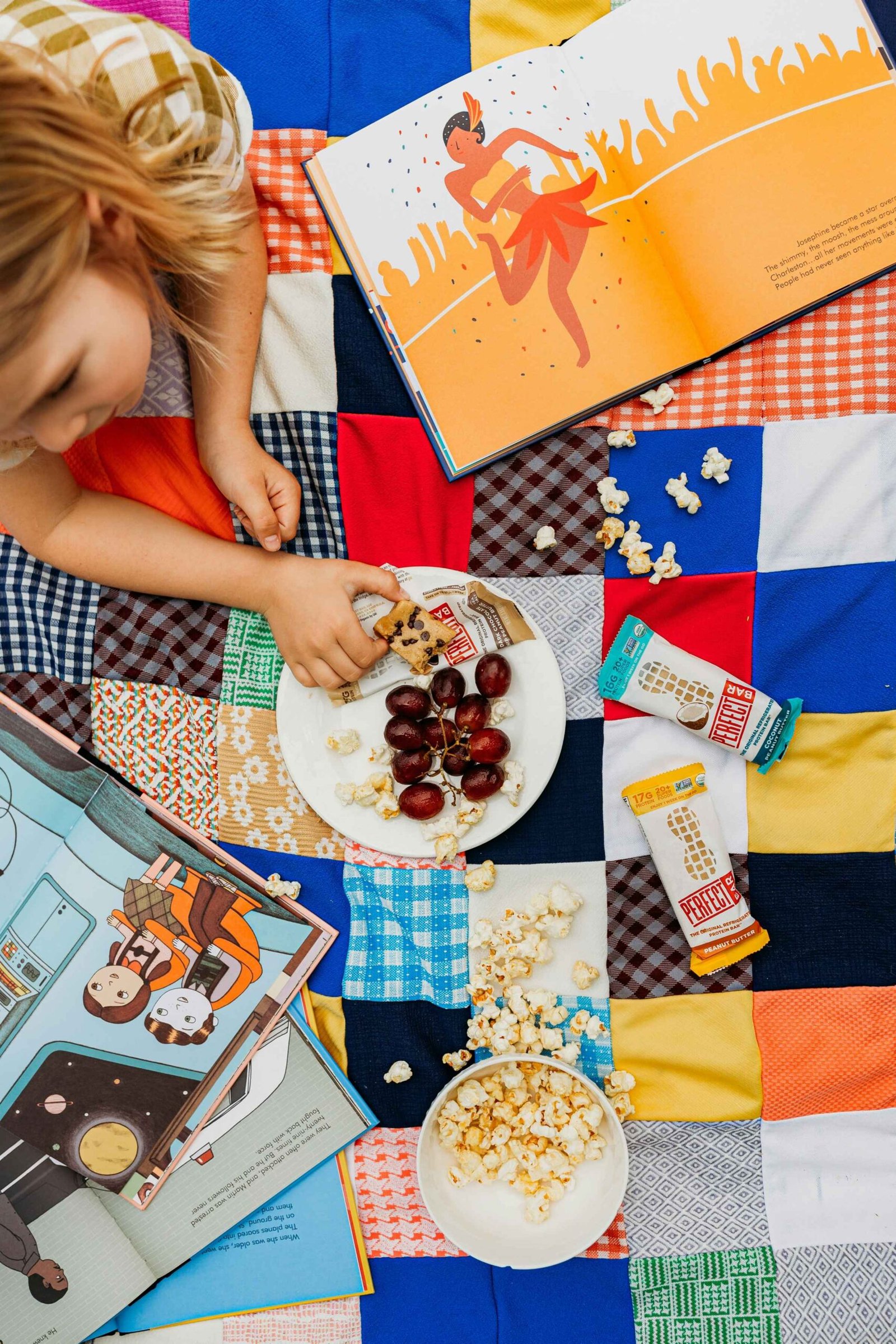
Whole nuts, popcorn, hard sweets, and chewy fruit snacks are not safe for toddlers. Prepare snacks to match your child’s skills, and if you are unsure, ask their clinician.
30 healthy snacks for toddlers
Use pasteurised dairy, fully cooked eggs, meat, fish, and well-cooked vegetables as listed. Let cooked food cool to a comfortable temperature before serving. Spoon foods, soft pieces, and toast strips suit different skills, so adjust the suggestions below to your child’s needs.
| # | Snack idea | Simple preparation |
| 1 | Banana yogurt | Stir mashed ripe banana into plain yogurt. |
| 2 | Pear porridge | Add soft stewed pear to cooked oatmeal. |
| 3 | Peach ricotta | Mash soft canned peaches into ricotta. |
| 4 | Applesauce cottage cheese | Mix unsweetened applesauce with cottage cheese. |
| 5 | Avocado and egg | Mash avocado with finely chopped cooked egg. |
| 6 | Sweet potato yogurt | Combine cooked sweet potato mash with plain yogurt. |
| 7 | Carrot lentils | Mash cooked red lentils with soft cooked carrot. |
| 8 | Broccoli bean bowl | Mix finely chopped soft broccoli with mashed white beans. |
| 9 | Pumpkin oats | Stir cooked pumpkin puree into soft oatmeal. |
| 10 | Potato and peas | Combine cooked potato with cooked, thoroughly mashed peas. |
| 11 | Hummus toast | Spread hummus thinly on suitable toast strips. |
| 12 | Avocado toast | Spread mashed avocado onto lightly toasted narrow strips. |
| 13 | Pear ricotta toast | Add ricotta and mashed soft pear to toast strips. |
| 14 | Peanut butter banana toast | Thinly spread smooth peanut butter; add mashed banana. |
| 15 | Seed butter apple toast | Thinly spread smooth seed butter; add applesauce. |
| 16 | Courgette scrambled egg | Fold finely chopped soft courgette into fully cooked egg. |
| 17 | Tofu pea mash | Mash cooked tofu with soft cooked peas. |
| 18 | Pumpkin chickpeas | Combine mashed cooked chickpeas with pumpkin puree. |
| 19 | Black bean avocado | Mash cooked black beans with ripe avocado. |
| 20 | Chicken potato bowl | Mix very finely shredded tender chicken into potato mash. |
| 21 | Salmon potato mash | Flake cooked salmon, check thoroughly for bones; mix with potato. |
| 22 | Tomato lentil pasta | Chop soft cooked pasta; add mashed lentils and tomato sauce. |
| 23 | Cheesy polenta | Stir finely grated cheese into moist, soft cooked polenta. |
| 24 | Blueberry yogurt | Mash soft blueberries thoroughly into plain yogurt. |
| 25 | Plum rice bowl | Add mashed stewed plum to soft cooked rice. |
| 26 | Mango ricotta | Mash very ripe mango into ricotta. |
| 27 | Softened cereal bowl | Soften suitable unsweetened cereal fully in milk; add banana. |
| 28 | Cauliflower bean dip | Mash soft cooked cauliflower with cooked white beans. |
| 29 | Apple cinnamon oatmeal | Stir stewed apple and a little cinnamon into cooked oats. |
| 30 | Apricot yogurt | Mash soft canned apricots into plain yogurt. |
Check ingredients for common allergens like milk, egg, wheat, soy, sesame, peanuts, and fish. Only use foods your child can tolerate and follow their allergy plan. Seed butter is not always a safe alternative for allergies.
For older siblings, our easy snacks for kids collection has more ideas. However, school-age snack recipes should not be used for toddlers without changes.
How can you make snack prep any easier?
Pick three snack combinations that use some of the same ingredients. For example, you can mash cooked sweet potato, and use yoghurt with fruit or vegetables. If your child doesn’t like mixed textures, keep the ingredients separate until serving.
For example, serve the usual yoghurt next to mashed pear before mixing them together. Watch what your child can handle, and adjust the next snack accordingly. You don’t need to try all 30 snack ideas in one week.
Our breakfast ideas for kids can help you use up ingredients you already have at home. Just remember, meals for school-age children will need some changes to be suitable for toddlers.
How should you store your snacks and deal with feeding issues?
FoodSafety.gov recommends keeping your fridge at 40°F/4°C or below. Put perishable foods in the fridge within two hours, or within one hour if it’s hotter than 90°F/32°C. Keep chilled snacks cold when transporting them, and always follow storage instructions on the packaging.
Talk to your child’s healthcare professional if you notice ongoing coughing while eating, trouble with textures, pain, or concerns about growth. Learn about first aid for choking from recognised training, not just food lists. This guide is for general food planning and is not medical advice. For tomorrow, you can serve a familiar food, cooked carefully and with an adult present.
Sources
- American Academy of Pediatrics: Building Balanced Snacks to Feed to Toddlers. Supports food-group variety, small initial portions and adapting common foods for toddlers.
- CDC: Choking Hazards. Supports appropriate texture and shape, seated supervision, named hazards and discussing choking preparedness with a health professional.
- NHS: Preparing Food Safely. Supports quartering small round fruit, softening firm produce, cheese and bread preparation, and avoiding nut-butter spoonfuls.
- FoodSafety.gov: 4 Steps to Food Safety. Supports refrigeration temperature and two-hour/one-hour limits.