Chores for Kids by Age: A Complete List From 2 to 16
Kids can start doing chores as early as age two, like putting a toy in a basket. As they grow, they can help with laundry,…
Kids can start doing chores as early as age two, like putting a toy in a basket. As they grow, they can help with laundry, meal prep, and caring for shared spaces. Choose a safe task, teach your child how to do it, and slowly add more responsibility as they get better.
A child who can put socks in a drawer might not know which drawer to use. Give clear instructions and make sure the place for things is obvious. For example, saying “Put these socks in your bottom drawer” helps more than just saying “Clean your room.”
How should you use an age based chore list?
Use age as a guide for picking chores, not as a rule for when a child should work alone. Think about your child’s strength, reach, coordination, understanding, and how much help they need. Kids who are new to a task might need just as much help as younger children.
The AAP has a range of suggestions for chores for the 5-7 year olds, the 8-10 year olds and the 11-12 year olds. Its teen chore guide looks at ongoing contributions to the home and to shared areas as well as the development of everyday life skills.
The table below is just our way of showing possible chores by age. It isn’t based on official milestones or AAP recommendations for each birthday. Choose one or two jobs that fit your child at their age. There’s no need to assign every job on the list.
Chores for kids by age: 2 through 16
| Age | Possible chores to teach | Help and boundaries |
| 2 | Put a few large toys in a basket; carry their own socks to a low hamper | Stay beside the child, point to the destination and help finish |
| 3 | Put books on a low shelf; place napkins on the table | Give one instruction at a time and keep items within easy reach |
| 4 | Match socks; wipe a small water spill with a cloth | Work together; adults handle cleaning products and check the floor is dry |
| 5 | Put unbreakable cups on the table; sort laundry into two baskets | Show the categories and supervise handling; no knives or hot dishes |
| 6 | Straighten a blanket; put toys in labeled places; water an adult-selected plant | Demonstrate each step and provide a small, manageable water container |
| 7 | Sweep a small clear floor area; fold washcloths; clear their unbreakable dishes | Define the area and check the result together |
| 8 | Put away folded clothes; help pack lunch from prepared ingredients | Make storage reachable and have an adult check food preparation and storage |
| 9 | Put away light groceries; dust an accessible shelf with a dry cloth | Adults handle heavy, breakable or hazardous items; no climbing to reach shelves |
| 10 | Vacuum an open floor area; assemble a familiar no-cook snack | Teach equipment use, manage cords and supervise food tasks as needed |
| 11 | Help change sheets; fold a laundry load; clear a table after a meal | Share awkward lifting and check for sharp or breakable items first |
| 12 | Learn a laundry cycle; help cook one familiar dish | An adult teaches appliance use and manages detergent, heat and sharp tools as needed |
| 13 | Take responsibility for a shared-room reset; plan ingredients for a simple meal | Agree on the finished result, budget and when an adult will check in |
| 14 | Wash towels using a learned routine; clean up after meal preparation | Follow appliance and product instructions with the agreed adult oversight |
| 15 | Prepare a familiar meal after training; maintain a grocery list for agreed staples | Adult confirms cooking readiness, food handling and spending arrangements |
| 16 | Plan, prepare and clean up a family meal; manage agreed laundry tasks | Review the whole job together; greater independence follows demonstrated skill |
These chores are suggestions for learning, not a promise that every child can do them safely. Earlier tasks can still be useful for older kids and teens. For example, a 14-year-old might set the table even if cooking isn’t right for them.
What can toddlers and preschoolers do?
For kids aged 2 and 3, choose chores with one simple action, like putting a toy in a basket, a book on a shelf, or a sock in the hamper. Keep the number of items small and do the task together.
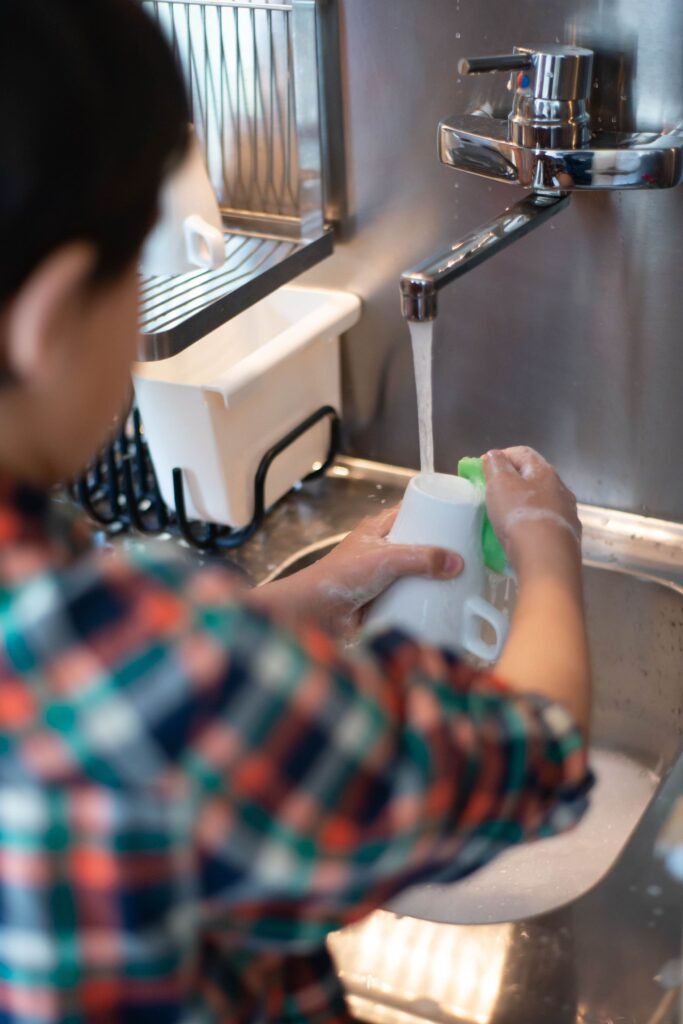
At age four, matching socks is an easy laundry job to do together. Lay out just a few pairs, not a big pile. Find the matches with your child and let them put the socks in the drawer you open.
The AAP guidance on growing independence refers to supported activities such as putting toys away, setting the table and putting dirty clothes in the basket for young kids. Begin with the version that is appropriate for your child and the resources available in your home.
For a toddler, “setting the table” could simply mean putting out the napkins while an adult handles the plates and other items. They don’t need to do everything themselves.
What changes for school age children?
Help your child finish a job fully before making it more difficult. For example, after putting toys in a box, they can check the whole play area and return the empty basket. If they fold washcloths, teach them where to put them away.
Decide together what “done” means. For example, after sweeping, it could mean moving crumbs into the dustpan and putting away the tools. If there is broken glass or another hazard, an adult should handle it.
When starting food prep, the adult can prepare the ingredients first. Our healthy food for kids guide covers basic meal parts and how to prepare them. Decide if your child is ready for knives, heat, or appliances. Being old enough to help with lunch doesn’t mean they’re ready for every kitchen job.
For your first cooking session together, give your child just one job, like laying out the toppings. Our family activitiesguide includes ideas for supervised food assembly and meal planning if you want to try those before regular cooking tasks.
What tasks are useful for tweens and teens?
Tweens can learn the steps of a bigger job: gather supplies, do the task, check the result, and put everything away. For laundry, teach sorting and folding before moving on to using the machine or measuring detergent. Add new steps once the first ones are mastered.
For teens, agree on a full responsibility with clear boundaries. For example, “Reset the living room before dinner” could mean tidying up, folding blankets, and taking cups to the kitchen. It shouldn’t turn into cleaning every room.
The AAP suggests chores for teens like cleaning the kitchen, caring for shared spaces, and other housework. Make sure the tasks match your teen’s skills and schedule. Leave enough time for school, sleep, and other activities. Just because a teen is good with a phone doesn’t mean they’re ready to use kitchen equipment.
Caring for siblings isn’t included as a regular chore here. Deciding on this depends on the older child’s maturity, the younger child’s needs, local rules, emergency plans, and whether an adult is available. An older child shouldn’t automatically replace an adult caregiver.
How do you teach a chore without doing it all yourself?
Use this teaching sequence for a simple, low-risk chore:
- Name one job. “Fold these three washcloths.”
- Show a complete example. Fold one slowly and say where it goes.
- Do the next one together. Let the child handle the part they can manage.
- Let them try. Stay available rather than immediately correcting every movement.
- Check the finish. Look at the agreed result and put supplies away.
A towel doesn’t need perfectly square corners to be useful. If something needs fixing, point out the step, like saying, “That one’s still wet, it needs to finish drying before we put it away.”
Give specific feedback, like “You put every book back on the shelf.” Instead of saying the whole job was wrong, point out which step was missed. More practice can come later; the first try is about learning the steps.
How many chores should children have each day?
This guide doesn’t set a number of chores. A good place to start is with one small regular chore and one occasional shared task, adjusted for your child and your family’s schedule. This is just a suggestion, not a strict rule.
Fit chores into your daily routine, like clearing the table after dinner or putting dirty clothes in the hamper when changing. Note who will help and when the job should be done. Using “after dinner” is easier than setting an exact time, since schedules can change.
If chores are making bedtime later or causing a big backlog, check how much work there is and how much help your child has. New tasks can take longer than adults expect. Don’t use the age table as a daily checklist for every possible chore.
Should children be paid for doing the chores?
Decide what paying for chores means in your family before starting. You might treat regular chores as shared duties and pay only for extra jobs you agree on. Or, you could tie allowance to certain tasks. Either way, it doesn’t have to turn into a debate over every small job.
If you decide to pay for extra chores, agree ahead of time on the job, how to do it safely, what the finished task looks like, and the payment. Never withhold food, care, or other basic needs if a job is missed. The chart below can be used with or without an allowance, since it tracks the job, not the payment.
Which jobs require extra care?
Check the area and materials before giving out chores. The National Capital Poison Centre says laundry detergents and similar products can be dangerous for kids, so keep them out of sight and reach, and always in their original containers.
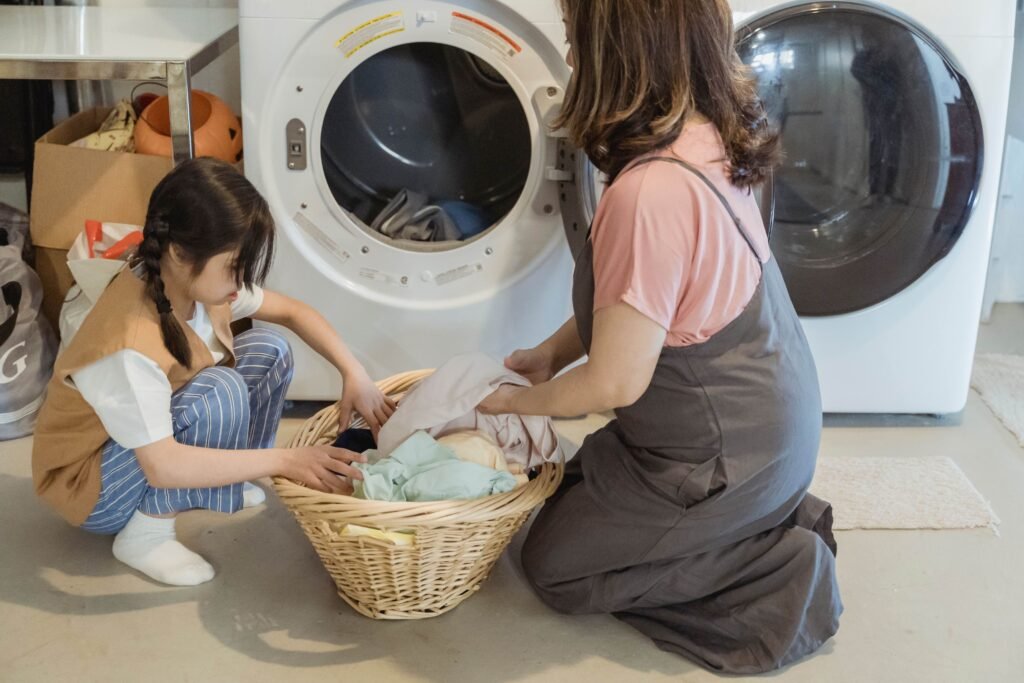
Young children can learn to sort clothes without touching detergent. Keep them away from laundry pods, bleach, and stain removers. For older kids and teens, teach handling these products as a separate task from folding or using the machine. Always follow the labels and show them how to do it safely.
Don’t include broken glass, sharp objects, hot cookware, heavy lifting, ladders, power tools, or hazardous waste in beginner chores. This also means no lawn mowers or unsupervised pet care. Pets, appliances, and cleaning products all have risks that aren’t just about age.
Free printable chore guide and weekly chart
The two-page printable includes an age guide and a blank weekly chart. Choose suitable jobs from the article, then write down the job, when it happens, what help is needed, and what “done” means. Only check off the days when the job is due. Leaving a square blank on another day doesn’t mean a chore was missed.
You can also copy this smaller version onto paper:
Name: ____________________ Week beginning: ____________________
| Chore | When it happens | Help needed | What “done” looks like |
| ____________________ | ____________________ | ____________________ | ____________________ |
| ____________________ | ____________________ | ____________________ | ____________________ |
| ____________________ | ____________________ | ____________________ | ____________________ |
Keep next week: ____________________ Change next week: ____________________
What if your child is still having difficulties with the chores?
Make sure the task is clear, doable, and manageable. Instead of “Tidy your room,” try saying “Put the books on that shelf.” You can also make chores easier by letting your child sit, reducing the amount to do, using pictures, or working together. Support doesn’t have to be removed for their effort to count.
If your child is having ongoing difficulty with the everyday tasks at home and at school then it’s worth discussing this with their pediatrician and with their teachers. The AAP would recommend that you seek a pediatrician’s opinion if the child continues to have problems with domestic duties. This article is a general set of parenting tips and not a developmental assessment or medical advice.
Choose one chore to practice today. Show your child where the supplies go, do the task together, and write down one step they can try on their own next time.
Sources
- American Academy of Pediatrics: Age-Appropriate Chores for Children, updated February 9, 2024. Supports broad school-age chore categories, introducing responsibilities gradually, clear expectations and discussing concerns with a pediatrician.
- American Academy of Pediatrics: Growing Independence—Tips for Parents of Young Children, updated November 2, 2009. Used only for its supported preschool household-task examples, not its older screen-time guidance.
- American Academy of Pediatrics: Household Chores for Teens, updated February 9, 2024. Supports continued household contributions and practical teen task categories.
- National Capital Poison Center: Children and Laundry Products. Supports product hazards, original-container storage and keeping products out of children’s sight and reach.
All sources were opened and reviewed October 21, 2026. The exact single-year assignments, teaching examples and chart are editorial suggestions, not validated age milestones or results from personal testing.