Family Activities: 50 Ideas to Do Together at Home and Outdoors
Family activities might be as easy as drawing together, playing a question game, packing a picnic, or taking a walk around your neighborhood. We’ve put…
Family activities might be as easy as drawing together, playing a question game, packing a picnic, or taking a walk around your neighborhood. We’ve put together 50 ideas for rainy days, quick breaks, and weekends. Check the comparison table to pick what fits your budget, location, age, and schedule.
If everyone’s a bit tired and you only have ten minutes before dinner, try a shared doodle or a quick ‘would you rather’. Save the bigger projects for days when you’ve got the time and energy to set it up and clean it up.
Choose a family activity by cost, age, and time
Each idea in the table begins with a simple instruction. Start by reading the activity name and location. Next, check how much time and what supplies you’ll need before letting the kids choose.
How to read the table:
- Free means no additional purchase when you use supplies you already own or a free local venue. Food, transport, and parking can still cost money.
- Under $20 is a suggested limit for basic supplies for the group. It’s not an exact price or a guarantee of local costs. Try to use what you already have and check your total before buying anything new.
- The suggested ages are just starting points for when kids can join adults in activities. Adjust them based on your child’s interests, abilities, and how much supervision they need. These are not safety certifications.
- The time listed is just an estimate for the activity itself. Travel, setup, cooking, drying, and cleanup might take longer. These times haven’t been tested firsthand.
All activities with children need proper adult supervision. Adults should handle any cutting tools, heat, or anything a child can’t safely do.
| # | Family activity and how to start | Cost | Location | Suggested ages | Estimated time |
| 1 | Read aloud: Choose a short book and let everyone voice a character or point out a favorite picture. | Free | Indoor | 2+ | 10–20 min |
| 2 | Shared doodle: Pass one sheet around, adding a shape each turn until it becomes a picture. | Free | Indoor | 3+ | 10 min |
| 3 | Would you rather:Offer two silly choices and take turns explaining answers. Anyone can pass. | Free | Either | 4+ | 10 min |
| 4 | Story chain: Begin with a surprising sentence; each person adds the next part. | Free | Either | 4+ | 10–15 min |
| 5 | Family playlist:Each person chooses a song and explains what they like about it. | Free | Indoor | 5+ | 15–20 min |
| 6 | Photo-memory chat: Pick five family photos and tell the stories behind them without posting them online. | Free | Indoor | 4+ | 15–20 min |
| 7 | Card game: Teach one simple game using cards you own, playing an open-handed practice round first. | Free | Indoor | 6+ | 20–30 min |
| 8 | Puzzle together:Sort edge pieces, then share sections instead of racing to finish. | Free | Indoor | 4+ | 20–45 min |
| 9 | Animal charades:Act out familiar animals without speaking; pair younger children with adults. | Free | Either | 4+ | 15–20 min |
| 10 | Family quiz: Write questions about favorite meals, pets or shared outings, with an agreed answer key. | Free | Indoor | 7+ | 20 min |
| 11 | Paper airplane workshop: Fold two designs and compare flights down a clear hallway, away from faces. | Free | Indoor | 6+ | 20–30 min |
| 12 | Cardboard-box town: Use clean boxes to make buildings; an adult cuts openings before play. | Free | Indoor | 3+ | 30–45 min |
| 13 | Homemade board game: Draw a path, invent rules and use large paper markers to test it. | Free | Indoor | 7+ | 45–60 min |
| 14 | Indoor picnic:Spread a blanket on the floor and serve a meal you were already going to eat. | Free | Indoor | 2+ | 20–30 min |
| 15 | Family interview:Ask a relative about a childhood game or favorite place; take notes with permission. | Free | Indoor | 6+ | 20–30 min |
| 16 | No-cook snack assembly: Give each person an age-appropriate job, such as spreading or arranging prepared ingredients. | Under $20 | Indoor | 3+ | 15–20 min |
| 17 | Pizza assembly: Set out prepared bases and toppings; adults manage knives and the oven. | Under $20 | Indoor | 4+ | 20–30 min |
| 18 | Bake a familiar recipe: Read the instructions together, assign jobs and let an adult handle hot equipment. | Under $20 | Indoor | 5+ | 30–45 min |
| 19 | Plan a family meal:Everyone suggests one dish; check ingredients at home and agree on a shopping list. | Free | Indoor | 6+ | 20 min |
| 20 | Make greeting cards: Draw or write messages for people you know using paper and crayons. | Free | Indoor | 3+ | 20–30 min |
| 21 | Collage afternoon:Arrange large paper scraps or magazine pictures on a sheet; adults prepare cutouts as needed. | Free | Indoor | 4+ | 20–30 min |
| 22 | Paint together:Cover the table, use age-appropriate washable materials and choose one shared subject. | Under $20 | Indoor | 3+ | 30 min |
| 23 | Sock puppet show:Give clean spare socks personalities and perform a two-minute scene without small attachments. | Free | Indoor | 4+ | 30 min |
| 24 | Family comic strip:Draw four panels about an imaginary adventure; one person can write while another draws. | Free | Indoor | 6+ | 30–45 min |
| 25 | Indoor camping hour: Make a low blanket shelter in a clear space, then read or tell stories inside. | Free | Indoor | 4+ | 30–60 min |
| 26 | Dance break: Take turns picking music and inventing movements, with seated dancing available. | Free | Indoor | 3+ | 10–15 min |
| 27 | Follow the leader:Copy gentle movements such as waving, marching or tapping knees; change leaders often. | Free | Either | 3+ | 10 min |
| 28 | Paper-ball basket toss: Toss loose crumpled paper into a basket, adjusting the distance for each player. | Free | Indoor | 4+ | 15 min |
| 29 | Sock bowling: Roll a bundled pair of socks toward empty paper cups on a clear floor. | Free | Indoor | 4+ | 15–20 min |
| 30 | Mirror movements:Face a partner and slowly copy their hand and arm movements, then swap roles. | Free | Either | 4+ | 10 min |
| 31 | Neighborhood noticing walk:Choose a short familiar route and look for three things you have not noticed before. | Free | Outdoor | 3+ | 15–30 min |
| 32 | Nature scavenger hunt: Spot a rough texture, a curved leaf and a bird; observe without collecting wildlife. | Free | Outdoor | 4+ | 20–30 min |
| 33 | Cloud stories: From a comfortable shaded spot, describe shapes in clouds without looking directly at the sun. | Free | Outdoor | 3+ | 10–15 min |
| 34 | Birdwatching: Sit quietly, watch from a distance and draw or describe the birds you see. | Free | Outdoor | 4+ | 15–20 min |
| 35 | Sound map: Mark where you hear birds, leaves or footsteps on a rough map of your surroundings. | Free | Outdoor | 5+ | 15–20 min |
| 36 | Park picnic: Take your usual lunch to a nearby free park and choose a comfortable place to sit. | Free | Outdoor | 2+ | 45–60 min |
| 37 | Chalk town: Draw roads, buildings and parking places on an allowed paved surface away from traffic. | Under $20 | Outdoor | 3+ | 20–30 min |
| 38 | Plant a small pot:Choose an identified, child-appropriate plant, fill a container and decide who will water it. | Under $20 | Outdoor | 4+ | 20–30 min |
| 39 | Water the garden:Give children small manageable containers and water an adult-selected patch together. | Free | Outdoor | 3+ | 10–15 min |
| 40 | Backyard ball skills: Practice gentle passes with a suitable large ball, agreeing on a shared target count. | Free | Outdoor | 4+ | 15–30 min |
| 41 | Walk or wheel to a new spot: Choose a familiar accessible route and stop somewhere you usually pass. | Free | Outdoor | 4+ | 20–40 min |
| 42 | Short nature hike:Pick a route that suits the least confident participant and turn back before anyone is exhausted. | Free | Outdoor | 5+ | 30–60 min |
| 43 | Outdoor photo challenge:Photograph a pattern, a shadow and a color using a device you already own. | Free | Outdoor | 7+ | 20–30 min |
| 44 | Read outside: Bring a familiar book to a sheltered, comfortable spot and read a chapter or picture book. | Free | Outdoor | 2+ | 15–20 min |
| 45 | Shadow tracing:Trace a person’s shadow with chalk on an allowed safe surface, then compare it later. | Under $20 | Outdoor | 5+ | 15–20 min |
| 46 | Library visit: Use an available free library service; each person chooses a book to share afterward. | Free | Indoor | 3+ | 30–60 min |
| 47 | Free community event: Check an organizer’s listing for a suitable no-fee reading, concert or craft session. | Free | Either | 4+ | 30–60 min |
| 48 | Homemade treasure trail:Leave picture or written clues within one supervised space, ending at a shared drawing or note. | Free | Either | 5+ | 20–30 min |
| 49 | Neighborhood architecture hunt:Look from public paths for arches, round windows or patterned doors without entering private property. | Free | Outdoor | 6+ | 20–30 min |
| 50 | Make a repeat-next-week list: Each person names one activity to keep and one adjustment that would make it easier. | Free | Either | 4+ | 10 min |
What are good indoor family activities for a rainy day?
For an afternoon at home, you can combine several activities that use the same supplies. A sheet of paper can become a shared doodle, a comic strip, or a handmade greeting card. Lay everything out on one covered table so cleanup is easy.
If you want an activity with no materials, try a question game, a story chain, or charades. Start a story with “Our front door opened onto a forest this morning,” then let each person add a sentence. Together, decide how you all get home.
Our family questions game guide has lots of creative prompts and ‘would you rather’ questions to keep a short conversation going. Personal questions are always optional, and anyone can pass if they want to.
For a longer indoor session, try building an imaginary town out of boxes. Younger kids can decorate a shop, while older kids draw roads and make signs. Adults can prepare the boxes ahead of time. Stop while there’s still time and energy to clean up.
How can cooking become a family activity?
Pick a familiar meal and divide the tasks before you start. One person can read the recipe, another can shop for ingredients, and a younger child can lay out toppings or set the napkins. Adults handle anything hot, sharp, or tricky.
You can plan meals away from the kitchen, too. Ask everyone to suggest a dish, check what you have, and pick one to make together. Our weekly family menu plan guide has meal themes and a sample dinner schedule if you need ideas.
For food activities, remember to consider allergies and prepare food in a way that’s safe for the kids eating it. The under $20 category is a spending cap. If your recipe costs more, use what you already have or pick a simpler recipe.
What outdoor family activities require virtually no planning at all?
A short noticing walk just needs a good route. Pick one question to take along, like “How many different leaf shapes can we see?” or “Where can we spot something curved?” A child who likes to draw can sketch what they find, while others can describe it.
The American Academy of Pediatrics says outdoor play is a great chance for movement, exploration, and learning. Their guide has ideas for all ages, like outdoor reading, walks, and nature hunts. You don’t need to travel far to try these activities.
For more ideas, our Outdoor Family Activities Guide includes nature walks, scavenger hunts, bird watching, and photography challenges. Use the table to pick a time slot, then choose a location that works for your group.
Before hiking, check the route, conditions, and facilities. The NPS hiking with kids guide suggests bringing essentials like water, snacks, sun protection, and the right clothing and shoes. Pack enough for everyone and plan for breaks. Start with a shorter hike that’s easy to return from.
How do you go about selecting activities for toddlers, older kids and teens?
Offer two real options instead of asking an open-ended “What should we do?” For example, “Shall we draw at the table or take a 10-minute walk?” Make sure both choices fit your time, space, and budget.
For younger kids, show them the first step and let them join in for as long as they want. Reading aloud can include pointing at pictures, and a garden activity might be just one small watering job. Keep small craft items out of reach, since little ones might put them in their mouths.
Older kids can help design the activity, like writing clues for a scavenger hunt, making quiz questions, or figuring out a board game. Teens might prefer photography, music, cooking, or walking. Ask what they’re interested in and let them choose if they want.
When kids are different ages, give everyone a helpful role in the same project. One child can draw the treasure map, another can hide the big paper clues with an adult. Don’t make the oldest child responsible for entertaining or supervising the others.
Do family activities count as exercise?
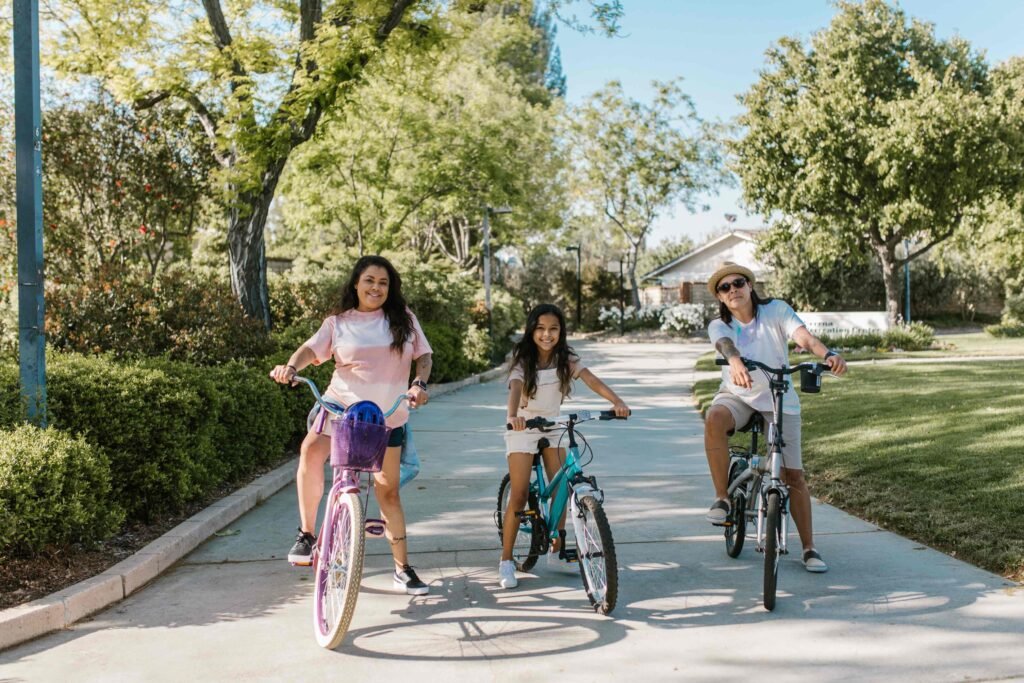
Some family activities count as exercise, depending on how much movement they involve. Dancing, active ball games, and brisk walking all count as physical activity. Reading, puzzles, and crafts are in a different category.
The CDC recommends that children aged 3-5 be physically active throughout the day. Children and teens aged 6-17 should get at least 60 minutes of moderate-to-vigorous physical activity each day, which should include a combination of aerobic, muscle-strengthening and bone-strengthening activities throughout the week.
A 15-minute family activity isn’t a full daily exercise plan. Mix in some fun movement with quiet time, and adjust for what each person can do. If your child has a health condition or injury, ask their doctor about possible adaptations. The ideas here are general and not medical advice.
How can you make family time easier to repeat?
Pick one short activity for weekdays and one longer one for weekends. Keep the needed supplies together and decide who will clean up. Have a backup plan for bad weather, like turning an outdoor picnic into an indoor one or a nature hunt into a picture hunt.
Here is a suggested plan, not a tested routine:
| Available time | First choice | Backup | What to prepare |
| 10 minutes after dinner | Would you rather | Shared doodle | Two questions or paper and crayons |
| 20 minutes on a rainy afternoon | Sock bowling | Card game | Cups and socks or a deck of cards |
| 45 minutes at the weekend | Park picnic | Indoor picnic | Your usual meal, water and a blanket |
If you need a quieter or seated option, adjust the activity before you start. You can do a paper ball toss at a table, a scavenger hunt with pictures, or dance using just hands and arms. Always check access, seating, and toilets before an outing so there are no surprises.
For more tips on daily home life, check out The Family Wellness. Keep your activity list simple: pick two from the table, gather the supplies, and ask everyone which one they’d like to try first.
Sources
- American Academy of Pediatrics: Playing Outside: Why it’s important for kids. Covers the topic of outdoor play, movement, curiosity and learning with age appropriate play suggestions.
- CDC: Child Activity—An Overview. Supports the physical activity guidance for ages 3–5 and 6–17 and the weekly mix of activity types.
- U.S. National Park Service: Hiking with Kids. Covers preparation and supplies.