Yoga Poses for Kids: 20 Easy Poses With Pictures
Kids can start yoga by standing tall, reaching their arms up, or moving gently on their hands and knees. Pick two or three poses that…
Kids can start yoga by standing tall, reaching their arms up, or moving gently on their hands and knees. Pick two or three poses that feel good, join your child, and let them stop whenever they like.
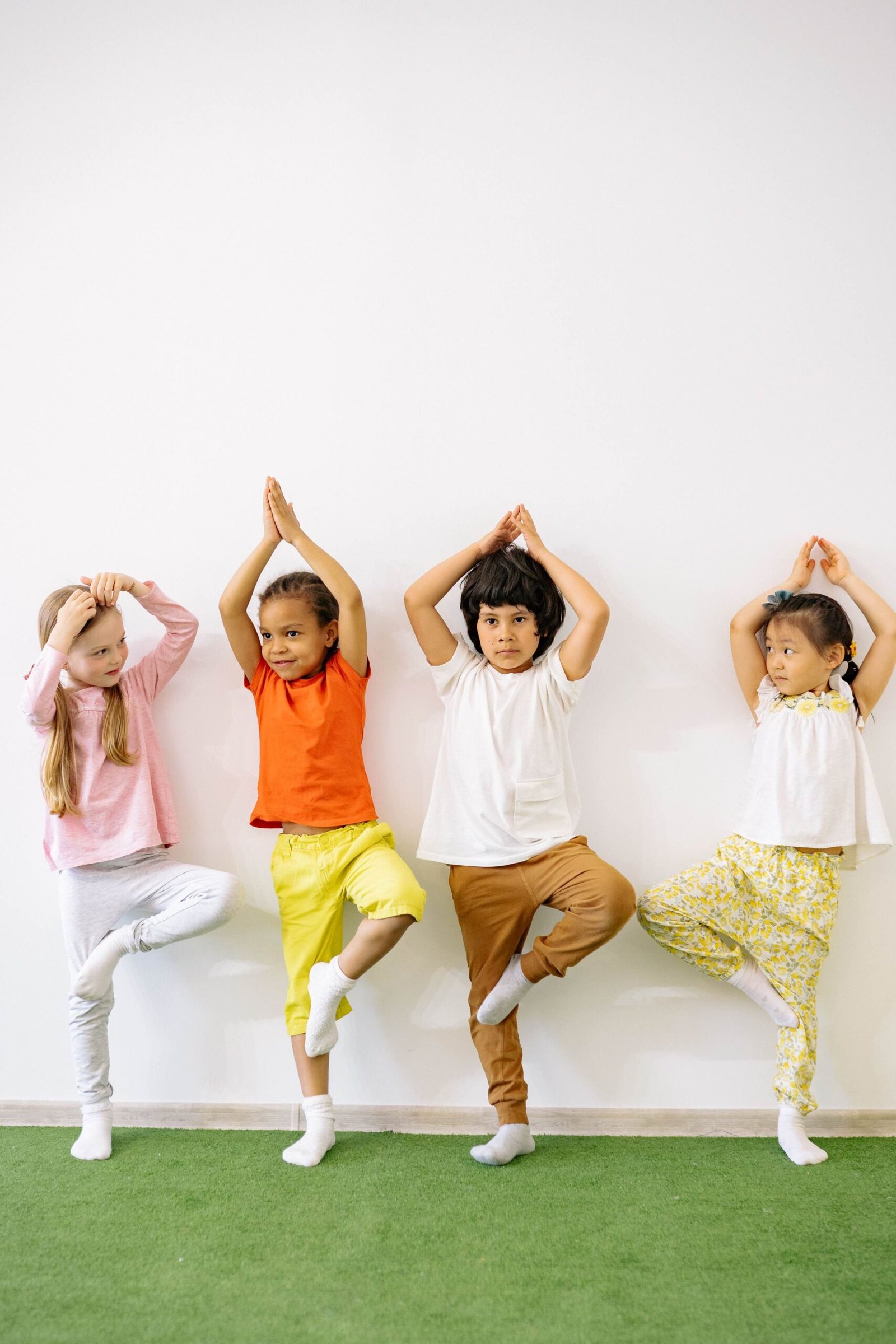
If your child prefers pretending to be a tree instead of following an exercise video, begin with that. You can ask what happens when the wind blows, then return to standing. You don’t have to do all 20 poses at once.
These illustrated poses are meant for school-age kids with an adult present. The pictures are simple diagrams, not goals for flexibility or perfect form. Younger kids or those needing special adjustments should have one-on-one guidance.
What should you know before you start?
The AAP suggests starting slowly, even if your child is flexible. Yoga isn’t only about poses; it also includes breathing, focus, and meditation.
Set up on a clear, non-slip surface with enough space to stretch, and remind your child to breathe normally. An adult should show the poses but never force a child’s limbs. Avoid painful movements, breath holds, headstands, or forced stretches. The NCCIH recommends having qualified instruction and skipping extreme beginner moves.
Standing yoga poses: start with a familiar shape
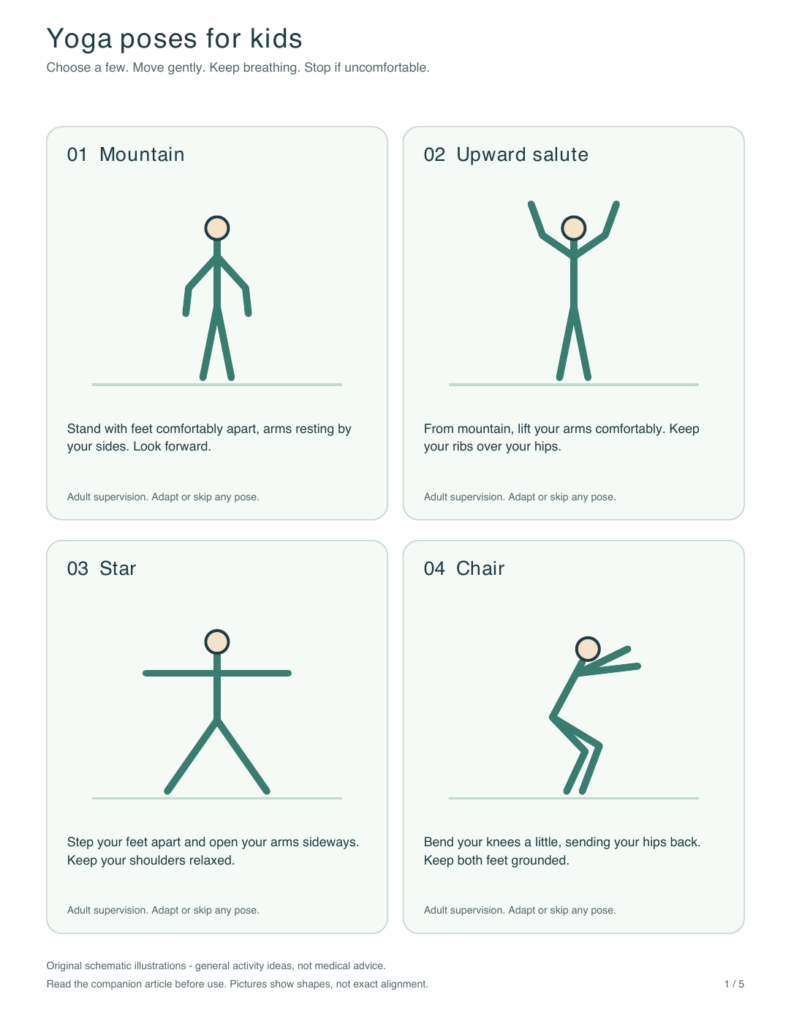
1. Mountain: Stand with feet comfortably apart, arms at your sides. Look forward and be aware of the floor under both feet. Keep your knees soft.
2. Upward salute: From the mountain position, lift your arms as high as you comfortably can. Keep your ribs above your hips rather than leaning backwards to get higher.
3. Star: Step your feet apart and stretch your arms out to the sides. Make sure there’s enough space so your fingertips don’t touch anyone or any furniture.
4. Chair: Bend your knees a little and move your hips back like you’re about to sit. Keep both feet on the floor, then stand up slowly.
Balancing and changing levels
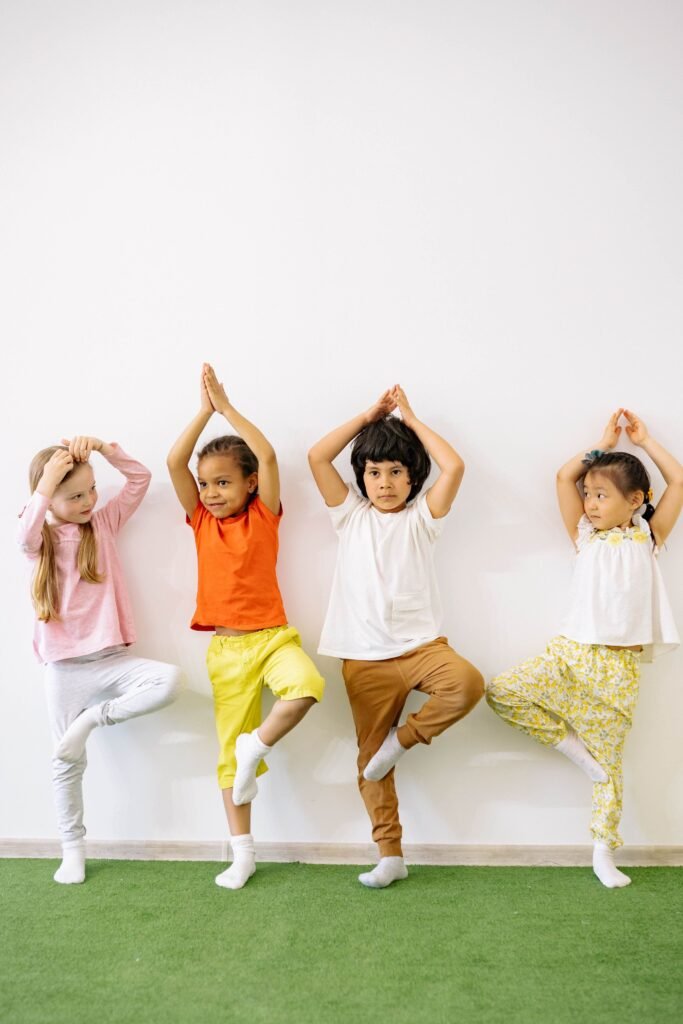
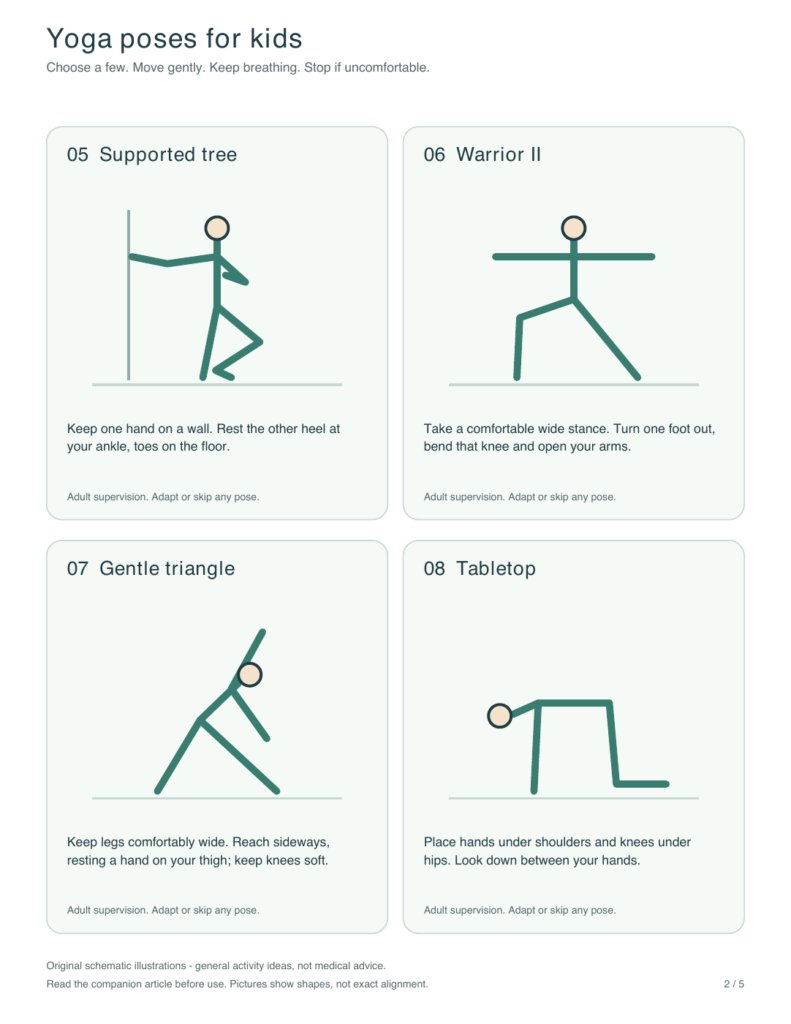
5. Supported tree: Keep one hand on a wall, rest the other heel against your standing ankle with your toes on the floor. Switch sides, never press against the knee.
6. Warrior II: Take a comfortable wide stance, turn one foot out and gently bend that knee towards the toes, open your arms and repeat on the other side.
7. Gentle triangle: Stand with your feet wide and turn one foot out. Reach to the side and rest your hand on your thigh, keeping your knees relaxed. Don’t try to touch the floor.
8. Tabletop: Get onto your hands and knees with your hands under your shoulders and your knees under your hips. Look down between your hands. Add some comfortable knee pads if you need to.
Hands-and-knees poses
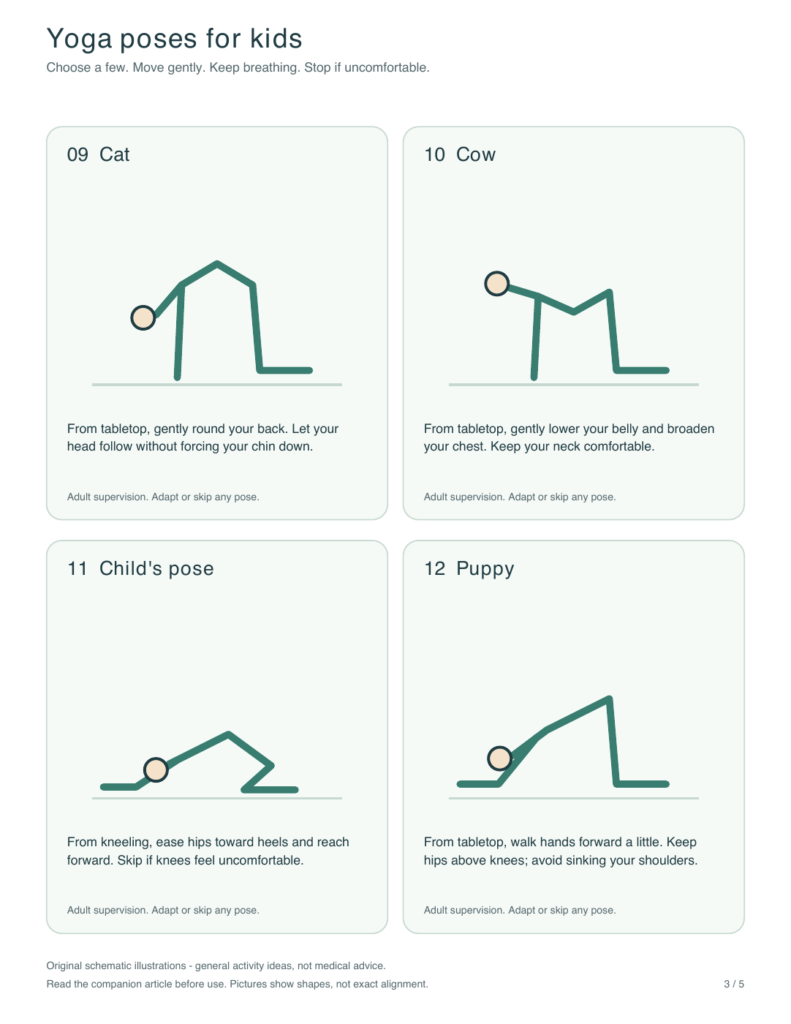
9. Cat: From tabletop, round your back gently upwards. Allow your head to follow the movement without forcing your chin down. Return to the starting position.
10. Cow: From tabletop gently lower your belly and broaden your chest. Keep the movement small and your neck comfortable. Return to tabletop between attempts.
11. Child’s pose: Start kneeling, then move your hips back toward your heels and reach forward. Only go as far as feels comfortable. Skip this pose if your knees or ankles hurt.
12. Puppy: From tabletop, move your hands forward a bit so your hips stay above your knees. Let your chest lower slightly, but don’t sink into your shoulders or push your head down.
Floor poses with gentle options
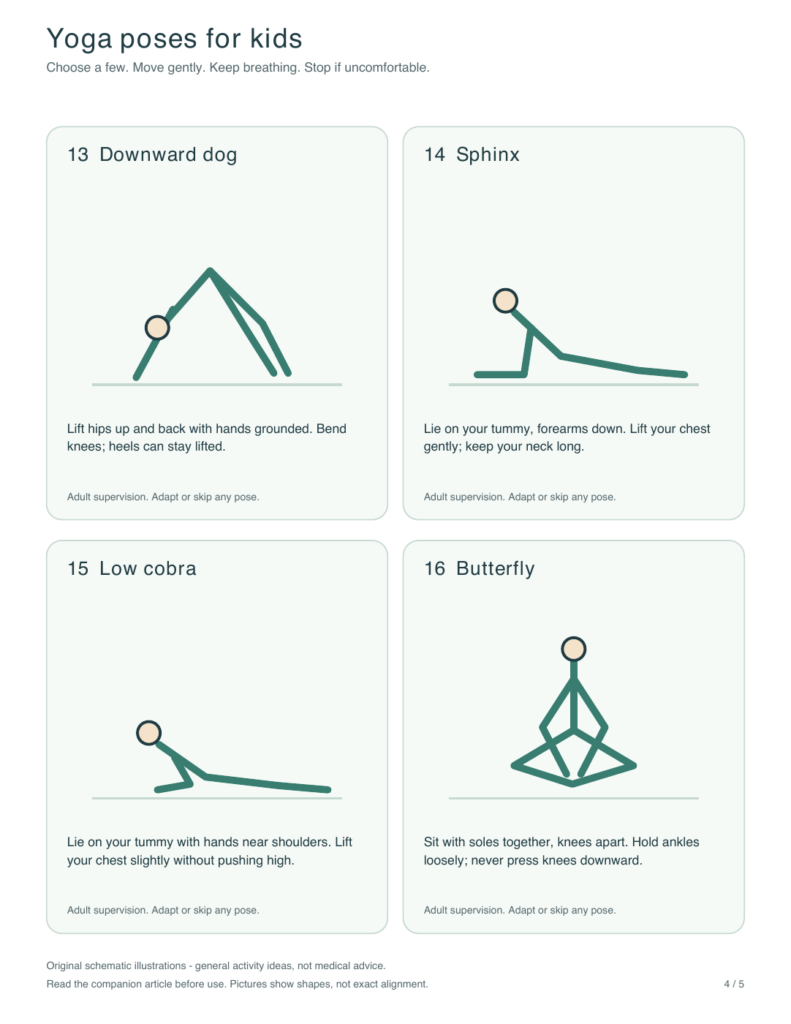
13. Downward dog: From tabletop, tuck your toes and lift your hips up and back. Keep your knees bent and heels lifted if necessary. Gently return your knees to the floor.
14. Sphinx: Lie on your stomach with your forearms on the floor and elbows under your shoulders. Gently lift your chest and look a bit forward and down. Lower yourself if your back feels uncomfortable.
15. Low cobra: Lie on your stomach with your hands near your shoulders. Gently lift your chest a little, but don’t push with your hands. Keep your neck long, then lower down slowly.
16. Butterfly: Sit with the soles of your feet together and your knees apart. Hold your ankles loosely and sit up comfortably. Never press your knees down or ask anyone else to do it.
Seated poses and a quiet finish
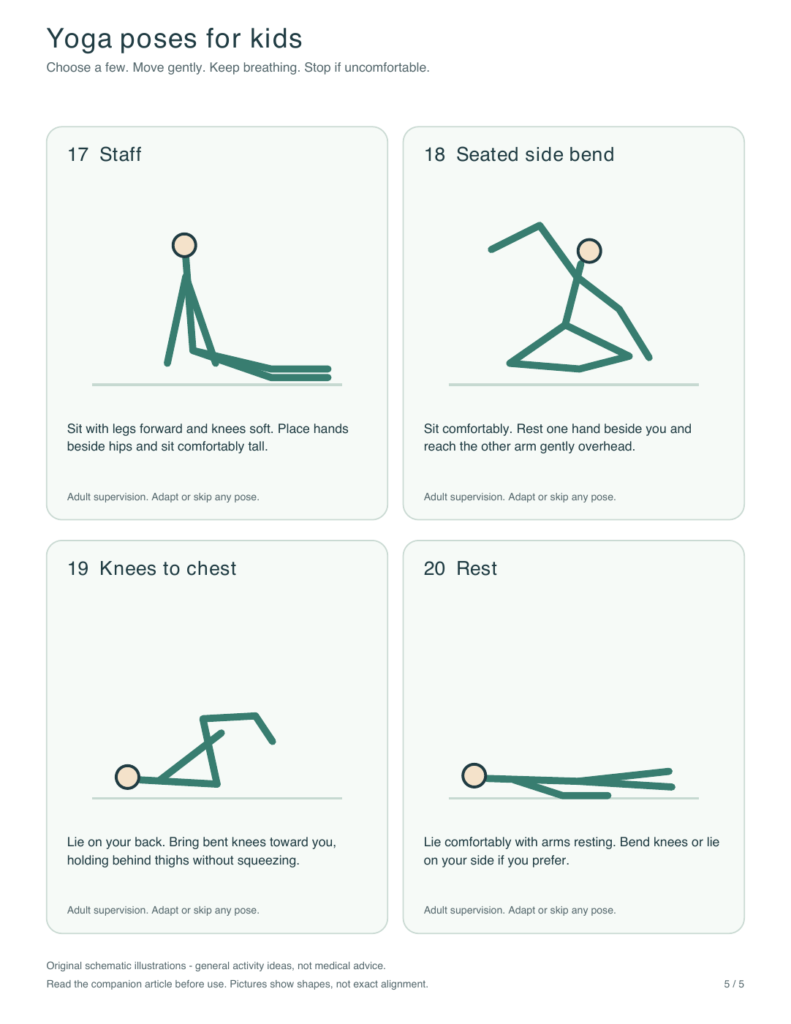
17. Staff: Sit with your legs stretched out in front, and bend your knees a little if needed. Place your hands by your hips. Sit upright without forcing your legs straight.
18. Seated side bend: Sit comfortably with your legs loosely crossed. Rest one hand by your side and reach the other arm up. Return to sitting straight and switch sides.
19. Knees to chest: Lie on your back and pull your bent knees toward you. Hold behind your thighs gently, without squeezing. You can also do one leg at a time if you like.
20. Rest: Lie comfortably with your arms at your sides. You can bend your knees or lie on your side if that feels better. You can keep your eyes open. This is simply a time to be still.
How do you put together a short routine?
Start with mountain, star, and rest. Action for Healthy Kids suggests beginning with two or three poses and keeping the session short. Spend a few easy breaths in each pose and move slowly to the next. Repeat only if your child wants.
For example, if your child doesn’t like putting weight on their hands, they can choose standing poses instead of cat and cow. Offer alternatives without making it feel like an easier task they must complete.
Our meditation for kids guide includes listening exercises you can read aloud for a calm ending. Our daily routine examples can help you find a short time to practice, and our mindful living tips encourage noticing the little things each day.
Printable yoga cards and professional guidance
Download the 20 illustrated pose cards. Print all 5 pages at their actual size, then cut out the cards. Choose a few poses to try together before you begin.
Talk to your child’s healthcare provider about any injuries, pain, dizziness, balance issues, or other health concerns that might affect movement. A qualified children’s yoga teacher can help adjust the poses as needed. Stop if anything hurts. These activities are general and not medical advice or a replacement for a treatment plan. Next time, your child can pick a favorite pose to repeat.
Sources
- American Academy of Pediatrics: Permission to Unplug—The Health Benefits of Yoga for Kids. Supports starting slowly and the broader nature of yoga. No treatment outcomes are promised here.
- NCCIH: Yoga—Effectiveness and Safety. Supports qualified guidance, modifications for health conditions and avoiding extreme practices when beginning.
- Action for Healthy Kids: Yoga for Children. Supports short sessions, a small initial selection, adapting movements and stopping for pain. Includes basic mountain, tree, warrior, cobra and cat-cow examples.